Getting money into your Binance account is the first practical step after registration and KYC verification. Binance offers several deposit methods, and each one works differently in terms of speed, cost, and availability for Korean users. Choosing the wrong method can mean paying 3% to 4% in fees on a deposit that could have cost almost nothing.
This article compares the three main deposit methods available to Korean Binance users: credit and debit card purchases, bank transfer, and P2P trading. Each method has specific advantages and limitations. Understanding them before your first deposit saves money and avoids common mistakes.
How Deposit Methods Work: The Basics
Binance does not accept Korean won (KRW) deposits directly. Korean users cannot transfer KRW from a domestic bank account directly into Binance. This is the most important thing to understand before choosing a deposit method.
Instead, Korean users have three main options. The first is to buy cryptocurrency directly on Binance using a credit or debit card. The second is to buy cryptocurrency on a Korean exchange like Upbit or Bithumb, then transfer it to Binance. The third is to use Binance P2P to buy USDT or other assets from other users who accept Korean won payments through Kakao Pay, Toss, or bank transfer.
Each method converts KRW into crypto at a different cost and speed. The right choice depends on how much you are depositing, how quickly you need the funds available, and how often you plan to deposit.
See also: TruLife Distribution Faces Darker Questions as NPI’s Allegations Paint a More Serious Picture
Credit and Debit Card Deposits: Fast but Expensive
Buying cryptocurrency directly on Binance with a credit or debit card is the simplest method. You enter your card details, select the amount in KRW, choose the asset you want to receive, and confirm the purchase. The crypto appears in your spot wallet within minutes.
The main drawback is cost. Card purchases on Binance carry a fee of approximately 1.8% to 2% of the transaction amount. Some Korean card issuers also charge an overseas transaction fee of 0.5% to 1% on top of the Binance fee. The total cost of a card deposit can reach 2.5% to 3% of the deposited amount.
On a 500,000 KRW deposit, a 2.5% fee costs 12,500 KRW. On a 1,000,000 KRW deposit, it costs 25,000 KRW. On a 5,000,000 KRW deposit, it costs 125,000 KRW. These fees are deducted from the purchase amount, so you receive less crypto than the face value of your deposit.
Card deposits also have limits. Most Korean cards have daily overseas transaction limits that may restrict large deposits. Binance imposes its own card purchase limits that vary by verification level and card type.
Card purchases are best suited for small, urgent deposits where speed matters more than cost. If you need to buy crypto quickly and the amount is under 200,000 KRW, the card fee is manageable. For larger amounts, the cost makes card deposits a poor choice compared to the alternatives.
A real example: Jiyeon, a 28-year-old investor in Seoul, used her Shinhan Visa card to buy 300,000 KRW worth of USDT on Binance. Binance charged a 1.8% fee, and her card issuer charged a 0.7% overseas transaction fee. Her total fee was 7,500 KRW. She received 292,500 KRW worth of USDT instead of 300,000 KRW. She later switched to the crypto transfer method for larger deposits after calculating the annual cost of card fees on her regular deposit amounts.
Crypto Transfer from a Korean Exchange: The Cheapest Method
Transferring cryptocurrency from a Korean exchange to Binance is the most cost-effective deposit method for most Korean users. The process involves two steps: buying crypto on a Korean exchange using KRW, then sending it to your Binance wallet address.
When you complete 바이낸스 가입 and finish KYC verification, you receive access to your Binance deposit addresses for each supported asset. These addresses are where you send crypto from your Korean exchange account. The transfer itself costs only the blockchain network fee, which is typically 1 USDT for TRC20 transfers or less than 1 XRP for XRP transfers.
The most commonly used transfer route for Korean users is USDT via the TRC20 network. Upbit and Bithumb both support USDT withdrawals on TRC20. The network fee on Upbit for a TRC20 USDT withdrawal is 1 USDT regardless of the transfer amount. This means that transferring 1,000,000 KRW worth of USDT costs 1 USDT in network fees, which is approximately 1,400 KRW at current rates. The fee percentage on a 1,000,000 KRW transfer is 0.14%, compared to 2.5% for a card deposit.
XRP is another popular transfer asset. XRP transactions on the Ripple network confirm in three to five seconds and cost less than 0.01 XRP in network fees. The Upbit withdrawal fee for XRP is 1 XRP, which is approximately 700 to 800 KRW at current prices. XRP transfers are slightly faster than TRC20 USDT transfers and cost slightly less in absolute terms.
The critical rule for crypto transfers is network matching. When you withdraw USDT from Upbit using the TRC20 network, you must deposit it into your Binance TRC20 USDT address. If you send TRC20 USDT to an ERC20 address, the funds will not arrive and may be permanently lost. Always verify the network on both the sending and receiving side before confirming a transfer.
A real example: Donghyun, a 35-year-old trader in Busan, regularly deposits 2,000,000 KRW into Binance each month. He buys USDT on Upbit and transfers it to Binance via TRC20. His total cost per deposit is 1 USDT in network fees, approximately 1,400 KRW. His monthly deposit cost is 1,400 KRW. If he used a card instead, his monthly deposit cost would be approximately 50,000 KRW at a 2.5% fee rate. His annual saving from using the crypto transfer method instead of a card is approximately 582,000 KRW.
The crypto transfer method requires an account on a Korean exchange and a completed KYC verification on both the Korean exchange and Binance. The process takes slightly longer than a card purchase, typically 10 to 30 minutes from start to finish including the transfer confirmation time. For regular depositors, this is the most practical and cost-effective method available.
P2P Trading: Flexible but Requires More Attention
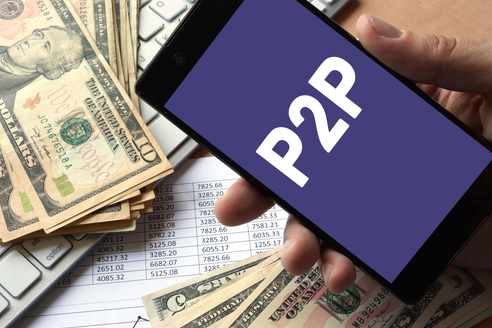
Binance P2P is a marketplace where users buy and sell cryptocurrency directly from each other. Korean users can buy USDT, BTC, ETH, and other assets from P2P sellers who accept Korean won payments through Kakao Pay, Toss, or domestic bank transfer.
P2P trading has no platform fee from Binance. The cost is embedded in the exchange rate offered by the seller. A seller offering USDT at 1,410 KRW per USDT when the market rate is 1,380 KRW is effectively charging a 2.2% premium. A seller offering USDT at 1,385 KRW per USDT is charging a 0.36% premium. The actual cost of a P2P purchase depends entirely on which seller you choose and what rate they offer.
The advantage of P2P is flexibility. P2P sellers accept payment methods that Binance does not support directly, including Kakao Pay and Toss. For users who prefer to pay with mobile payment apps rather than bank transfers or cards, P2P is the only option that supports these methods.
P2P also has no deposit limits imposed by Binance. Large purchases that would exceed card limits or require multiple bank transfers can be completed in a single P2P transaction if a seller with sufficient inventory is available.
The main limitation of P2P is that it requires more attention than the other methods. You need to select a reliable seller, verify their completion rate and number of completed trades, confirm the payment method, and complete the payment within the time limit set by the seller. Most P2P transactions on Binance complete within 15 to 30 minutes when both parties respond promptly.
When selecting a P2P seller, look for sellers with a completion rate above 95% and at least 100 completed trades. Avoid sellers with low completion rates or very few trades, as these carry a higher risk of disputes or delays. Check the seller’s payment window, which is the time you have to complete the payment after confirming the order. Most sellers set a window of 15 to 30 minutes.
A real example: Somin, a 31-year-old investor in Incheon, uses Binance P2P to buy USDT with Kakao Pay because she does not have a Korean exchange account. She filters P2P sellers by payment method (Kakao Pay), selects sellers with a completion rate above 98% and more than 500 completed trades, and checks the offered rate against the market rate before confirming. Her average P2P premium is 0.5% to 0.8%, which is significantly lower than the card fee rate. A 500,000 KRW P2P purchase at a 0.6% premium costs her 3,000 KRW, compared to 12,500 KRW for the same amount via card.
Which Method Should You Use?
The right deposit method depends on three factors: the amount you are depositing, the payment method you have available, and how quickly you need the funds.
For small, urgent deposits under 200,000 KRW where speed is the priority, a card purchase is acceptable despite the higher fee. The convenience justifies the cost at small amounts.
For regular deposits above 500,000 KRW, the crypto transfer method from a Korean exchange is the most cost-effective option. The fee is a flat 1 USDT regardless of the transfer amount, which makes it proportionally cheaper as the deposit size increases. Setting up a Korean exchange account and completing KYC takes one to two days but reduces deposit costs significantly for all future transactions.
For users who prefer mobile payment apps or who do not have a Korean exchange account, P2P trading offers a middle ground between the high cost of card purchases and the setup requirement of the crypto transfer method. Selecting sellers carefully and comparing rates before confirming keeps the P2P premium below 1% in most cases.
Many experienced Korean Binance users combine methods depending on the situation. They use the crypto transfer method for planned regular deposits, P2P for occasional large purchases, and cards only for small urgent top-ups. Understanding all three methods gives you the flexibility to choose the right one for each situation.