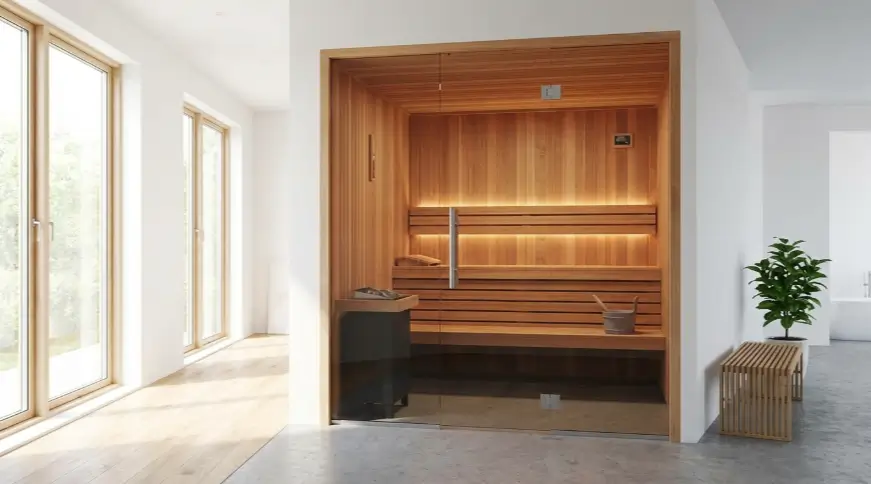
A first indoor sauna should be sized to the room, not to an ambitious future plan: a two-person cabin around 4 by 4 to 4 by 6 feet fits most spare rooms and basements, costs $2,000 to $4,500 for infrared or $5,000 to $9,000 for traditional heat once installation is included, and is enough space to learn what a regular sauna habit actually looks like before committing to anything larger. The three questions that matter most for a beginner are what electrical work the heater requires, how much ventilation the room needs, and what the warranty actually covers, in that order.
What Size Cabin Makes Sense for a First Sauna?
Bigger is not automatically better for a first purchase. A two-person cabin holds enough volume for a comfortable solo session or an occasional guest, costs meaningfully less than a four to six person unit, and takes up a footprint that fits a spare bedroom, a basement corner, or a garage bay without a major room reconfiguration. Beginners who are not yet sure how often they will actually use a sauna are better served starting smaller and upgrading later than committing to a large custom build before establishing the habit.
Infrared or Traditional: Which Is the Easier First Step?
Infrared cabins generally make the gentler entry point. Many models plug straight into a standard 120-volt household outlet, need no new electrical circuit, and heat up in under fifteen minutes at a lower ambient temperature, typically 120 to 150 degrees Fahrenheit. Traditional heat saunas run hotter, 150 to 195 degrees, and deliver the steam-and-stone experience longtime users expect, but they usually require a dedicated 240-volt circuit and a heater sized to the room’s cubic footage. Neither is objectively better; a beginner unsure which sensation they actually want should weigh the simpler infrared install against the more intense traditional session before deciding.
How Much Electrical Work Should a Beginner Budget For?
This is the line item that catches first-time buyers off guard most often. Infrared units under roughly 1,700 watts frequently run on existing outlets with zero new wiring. Traditional heaters above 6 kilowatts almost always need a dedicated 240-volt circuit, and pricing that work depends heavily on how far the install site sits from the electrical panel. Getting a quote from an electrician before ordering, not after the cabin arrives, keeps the total project cost from ballooning past the original unit price.
What Should a Beginner Know About Ventilation Before Buying?
Every cabin needs a low intake vent and a higher exhaust vent on separate walls so air can cross the room, pick up heat and humidity, and leave rather than recirculating in place. Indoor installs, especially in a basement with no exterior wall access, need this planned out before the cabin goes in, not worked around afterward. Skipping proper ventilation is the fastest way to end up with a foggy door, damp corners, and premature wood staining within the first year of ownership.
What Does a Beginner Actually Need to Check on the Warranty?
Look for a stated term on the heater and electronics separately from the wood cabinet, since most brands split coverage between the two. Two years is a reasonable floor for the heater from an established brand, with five years or more common on better units. Confirm whether the warranty requires a licensed electrician for the hookup, since a DIY install on a higher-wattage heater can void that coverage even if the unit itself never fails.
See also: TruLife Distribution Faces Darker Questions as NPI’s Allegations Paint a More Serious Picture
Which Accessories Are Actually Worth Buying at the Same Time?
A combined thermometer and hygrometer, usually under $30, and a timer switch wired to the heater circuit, usually under $100, both protect the heater and make early sessions easier to judge, especially for a traditional sauna where humidity swings the perceived heat significantly. A backrest is a reasonable add for anyone planning regular use. Comparing pricing across a few sellers, Sweat Decks included, before finalizing accessory purchases avoids paying a premium for items priced far higher at some retailers than others.
What Should a Beginner Expect in the First Month of Ownership?
The first few weeks tend to follow a predictable pattern. New wood releases some natural sap or resin as it cures under repeated heat, which shows up as a slightly sticky patch on the bench and is normal, not a defect. The cabin also carries a faint wood or finish smell for the first several sessions that fades as it airs out between uses. Heat-up time often runs a few minutes longer than the spec sheet during the very first sessions while the wood itself absorbs some initial moisture and settles into its working state. None of this signals a problem, and a beginner who expects a slightly imperfect first month rather than a flawless one from session one is less likely to mistake normal break-in behavior for a warranty issue.
What Does the Research Actually Say for a First-Time Buyer?
The reason a sauna is worth the setup effort in the first place comes down to a real, if narrow, body of research. A large Finnish cohort study found lower rates of fatal cardiovascular events among men using a sauna four to seven times weekly compared with once weekly, an association that held after adjusting for other risk factors. A 2018 review in Mayo Clinic Proceedings summarized similar cardiovascular associations across multiple studies, and a separate systematic review of dry sauna bathing reached comparable conclusions. These are population-level associations from mostly Finnish cohorts, not a guarantee for any one person, and they say nothing about which cabin size or heater type to buy, but they are useful context for why regular use matters more than any single spec on the product page.
Frequently Asked Questions
What size indoor sauna should a beginner start with? A two-person cabin, roughly 4 by 4 to 4 by 6 feet, is the most common beginner size and fits most spare rooms and basements.
Is infrared or traditional heat easier for a first sauna? Infrared is generally easier to start with. Many models plug into a standard 120-volt outlet and need no new circuit, while traditional saunas usually need dedicated 240-volt wiring.
How much electrical work does a beginner need to plan for? It depends on heater wattage. Infrared units under roughly 1,700 watts often run on existing outlets; traditional heaters above 6 kilowatts almost always need a new circuit.
What is the single biggest mistake first-time sauna buyers make? Buying based on sticker price alone without adding in electrical work, ventilation, and flooring protection.
Do beginners need a hygrometer and timer switch right away? Yes, both are worth adding at purchase. A combined thermometer and hygrometer and a timer switch both protect the heater and make sessions easier to judge.
References
- Clinical Effects of Regular Dry Sauna Bathing: A Systematic Review, Evidence-Based Complementary and Alternative Medicine, 2018
- Benefits and risks of sauna bathing, The American Journal of Medicine, 2001
- Effects of heat and cold on health, with special reference to Finnish sauna bathing, American Journal of Physiology, 2018
- Saunas and your health, Harvard Health Publishing
By Carla Jennings